

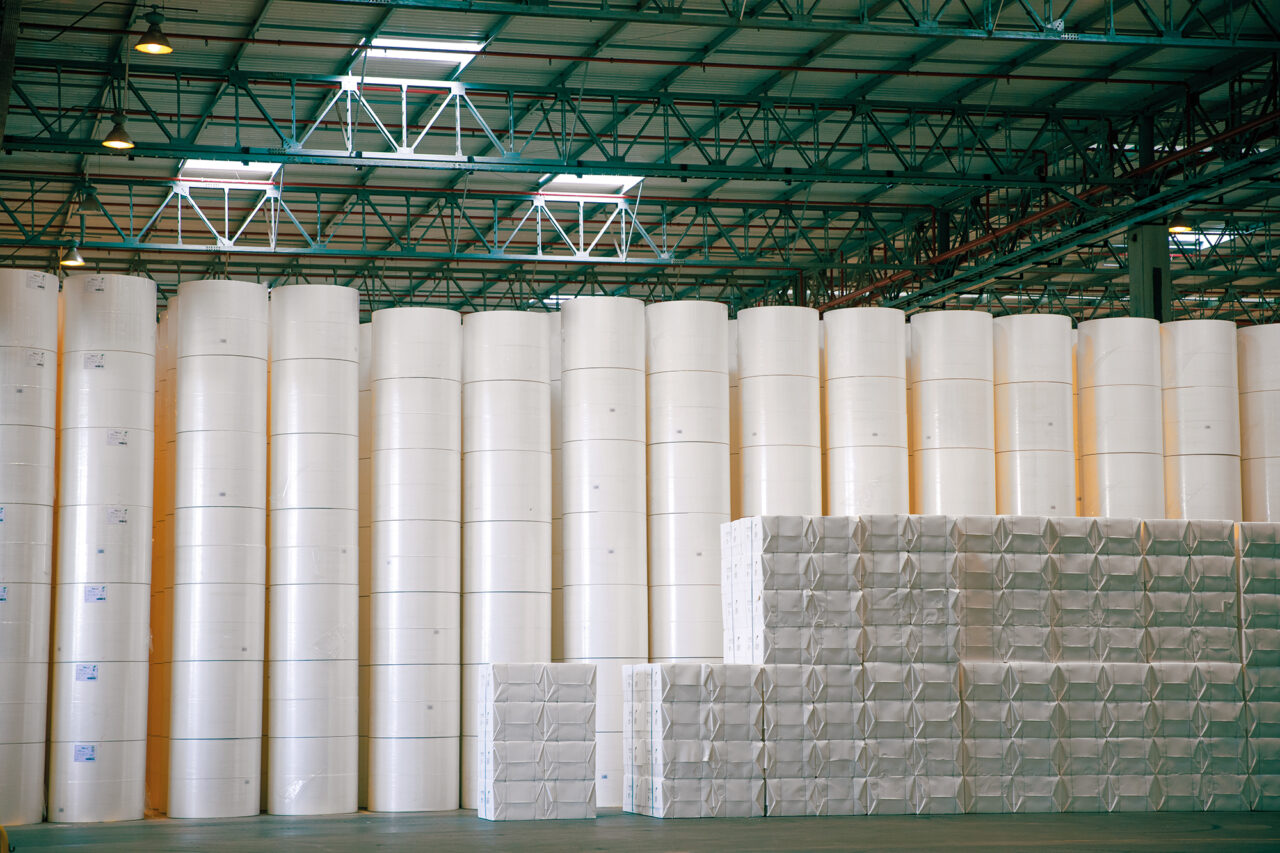
If you get the chance to be shown round one of Fedrigoni’s paper mills, you will see all the stages in the manufacturing journey from pulp to paper with the impressive machinery, control systems and skilled workers whose efforts result in the final products – huge rolls of paper in all the multiplicity of weights, textures, colours and finishes in the company’s product ranges.
At the start of this line is a warehouse piled high with bales of raw pulp, with labels that indicate its origins in faraway forests. The sight of these bales prompts questions. How is pulp made? What trees does it come from, and whereabouts in the world? How does Fedrigoni ensure that this part of the process is as sustainable as its paper manufacturing?
All Fedrigoni’s paper mills are managed under FSC® CoC (the Forest Stewardship Council’s Chain of Custody) certification. According to the most recent data, 96% of the pulp purchased is FSC®-certified, while the remaining 4% comes from sources classified as FSC® Controlled Wood. The pulp comes from various suppliers: Klabin, Suzano and Södra are Fedrigoni’s ‘strategic suppliers’. We talked with representatives of all three companies to find out more about the journey from seedling to tree to raw pulp, baled up, transported and ready for Fedrigoni’s paper mills.
‘Sustainability extends to every partner we work with,’ says Alessandro Gaiati, Chief Procurement Officer, Fedrigoni Group. ‘Through dialogue and a shared vision, we collaborate closely with our strategic suppliers to move forward. By combining expertise and working towards independently measurable goals and joint action plans, we aim to foster a culture of continuous improvement that elevates the entire value chain. We don’t just reach targets – we help shape a more responsible, resilient future for our industry, supporting our customers on their journey to reduce their environmental impact.’
Suzano
Brazilian paper company Suzano, founded in 1924, is the largest eucalyptus pulp manufacturer in the world, and its partnership with Fedrigoni goes back more than twenty years. Though the company owns mills in Finland and the US, the majority of Suzano’s operations are in multiple locations within Brazil, with more than 23,000 employees and 33,000 contractors. ‘We own 2.9 million hectares of land,’ says Paulo Leime, Suzano’s managing director for Europe and the Middle East. ‘Roughly 1.1 million for conservation purposes and most of the remainder on farms where we plant our eucalyptus trees in order to crop after six to seven years’ growth before planting again.’
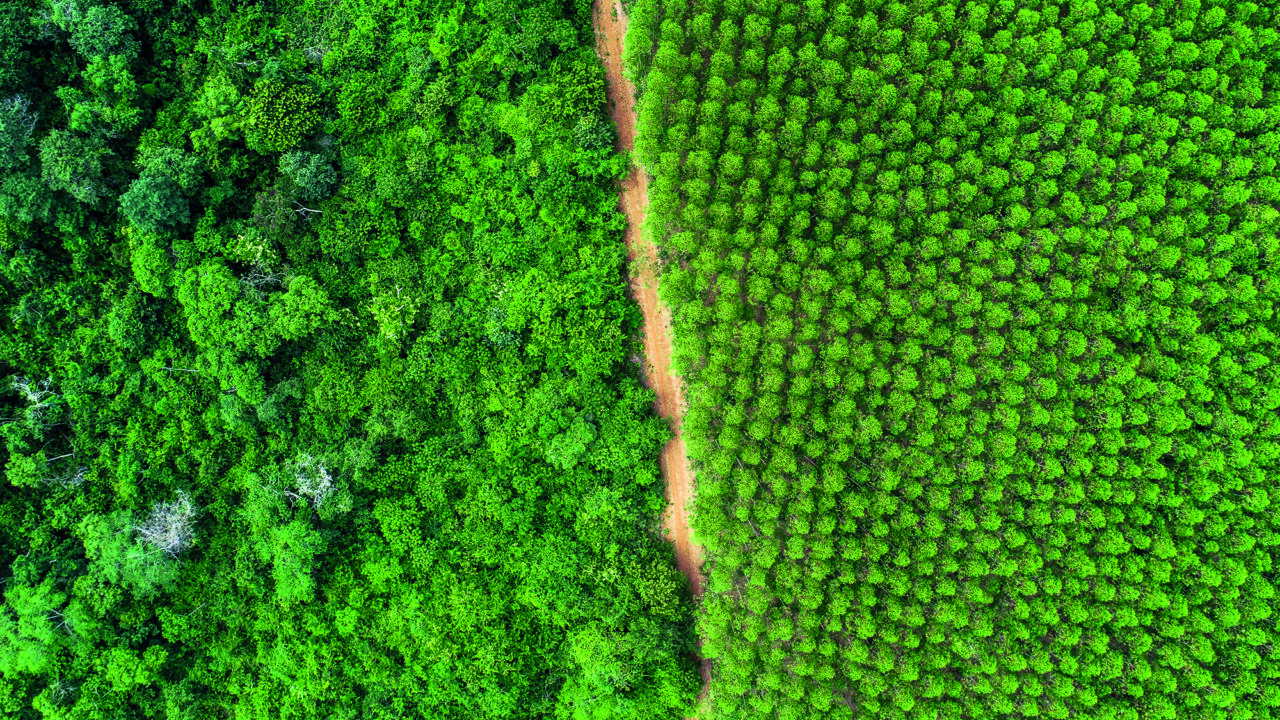
Suzano adopts a ‘mosaic’ planting system that intersperses eucalyptus farms with native forests, which helps restore degraded land, promotes the return of native flora and fauna and enhances the biodiversity of the area.
The products Suzano produces include several different types of pulp: Biopulp, used mainly for paper; Eucafluff, a ‘eucalyptus fluff’ used in absorbent hygiene products; and Biofiber, a biodegradable, microfibrillated cellulose with multiple uses, including building materials, cosmetics and sustainable fabrics.
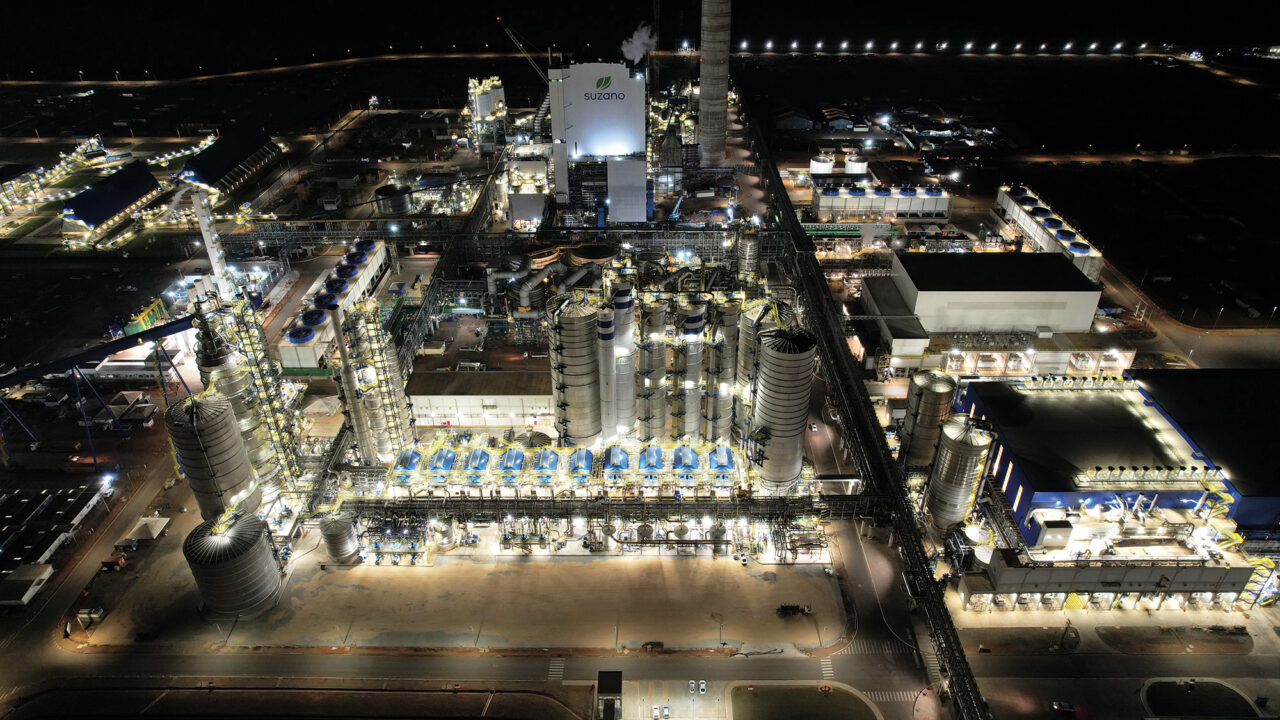
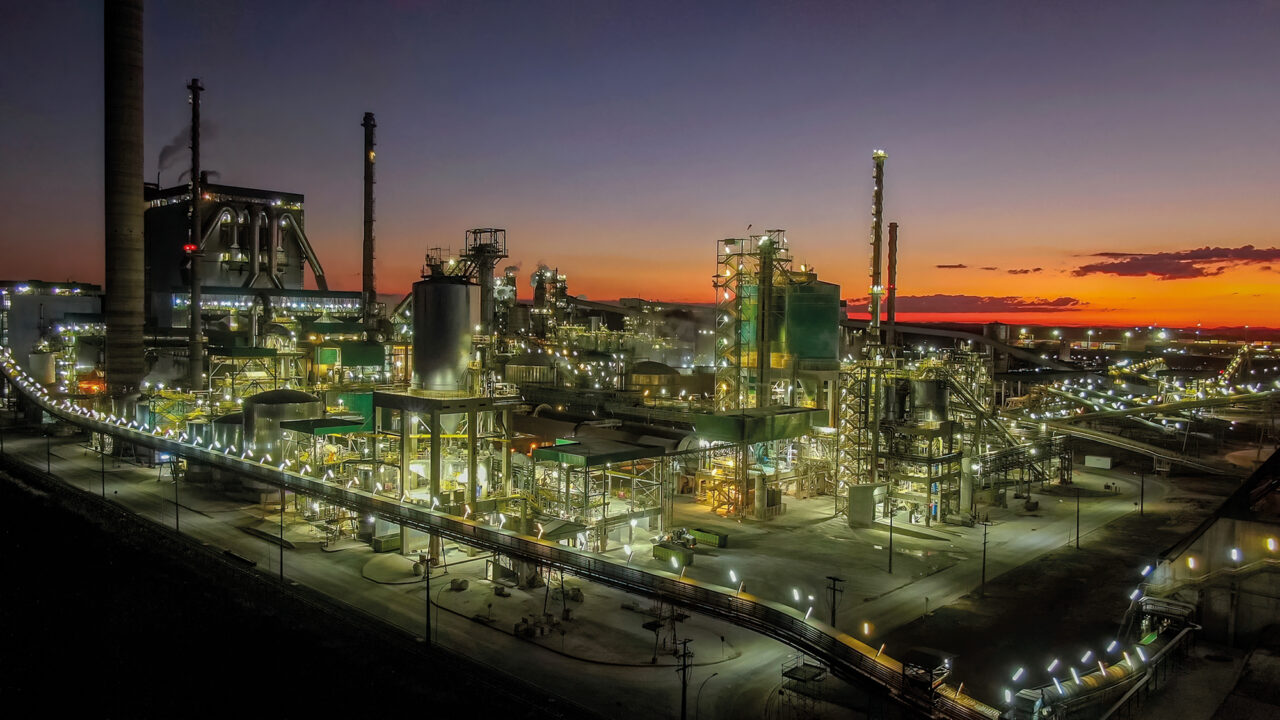
‘Sustainability is not a corporate area inside the organisation, it’s part of the core strategy,’ says Leime. ‘Just to give you one example, we recently started up a new pulp mill, the biggest pulp line in the world, in the Mato Grosso do Sul state in Brazil.
‘The majority of the energy the mill needs is produced inside the mill; it’s a biomass technology where we generate energy for our own production and sell the extra energy to supply the grid in Brazil.
‘The city where we built this mill had 18,000 inhabitants. We had over 10,000 people working on its construction. We had to build hospitals, schools and roads to support the municipality. So there is a change in the local dynamics which helps people with developing their region.’
Leime is keen to communicate a better understanding of his industry within the wider world.
‘We touch the lives of two billion people across the world through products that we and our customers like Fedrigoni produce,’ he says. ‘So it’s a massive operation, and we work through associations and through our customers to create more awareness of the importance of our industry and the way we operate in Suzano. ‘For example, we plant more than one million trees per day in order to make pulp!’ The company’s slogan is: ‘We plant the future.’
Our conversation turns to the essential business of turning trees into pulp, which he explains in the language of gardening and cooking.
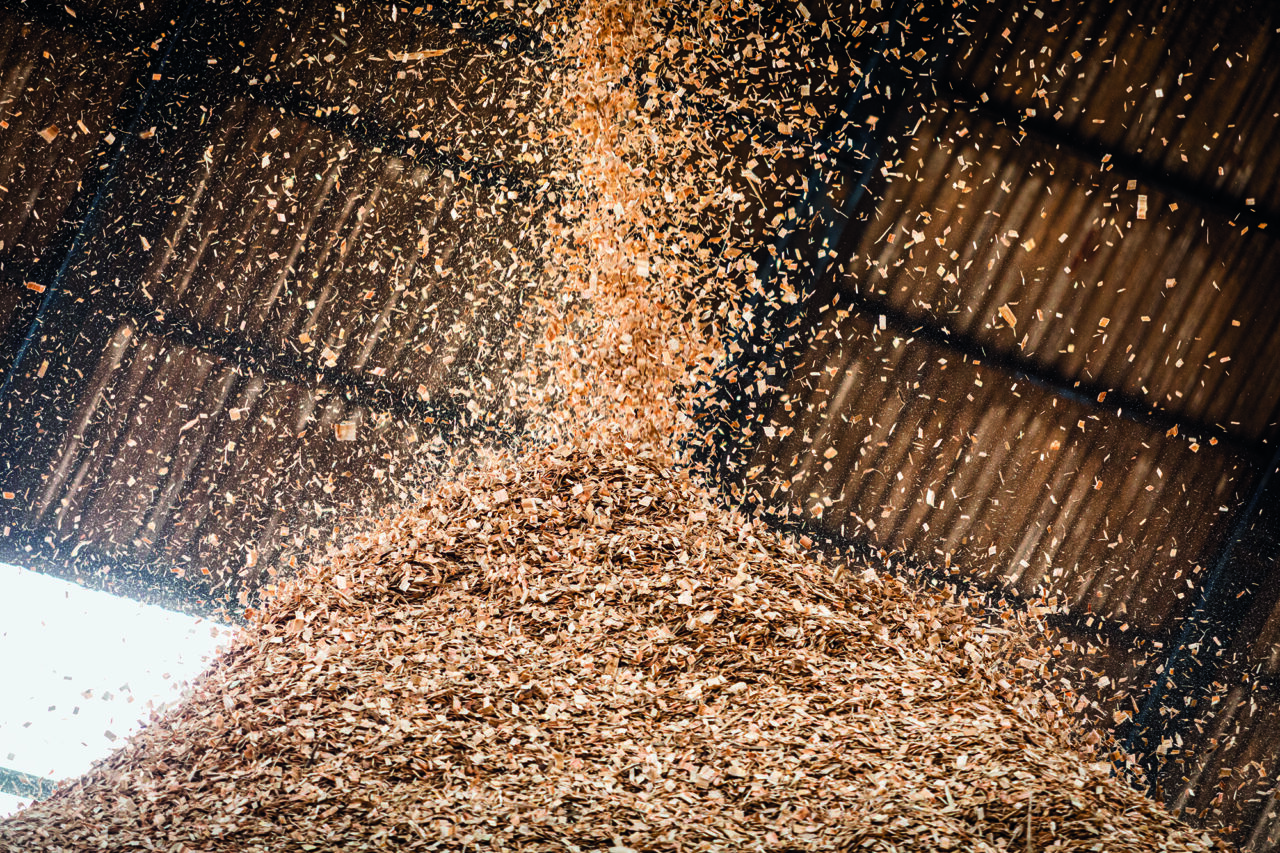
‘We plant the tree, and after six to seven years, it’s ready for harvest,’ says Leime. ‘The bark is removed and left in the field to enrich the soil with nutrients. The logs are then taken to the mill, where they’re essentially put through a giant blender to create wood chips.
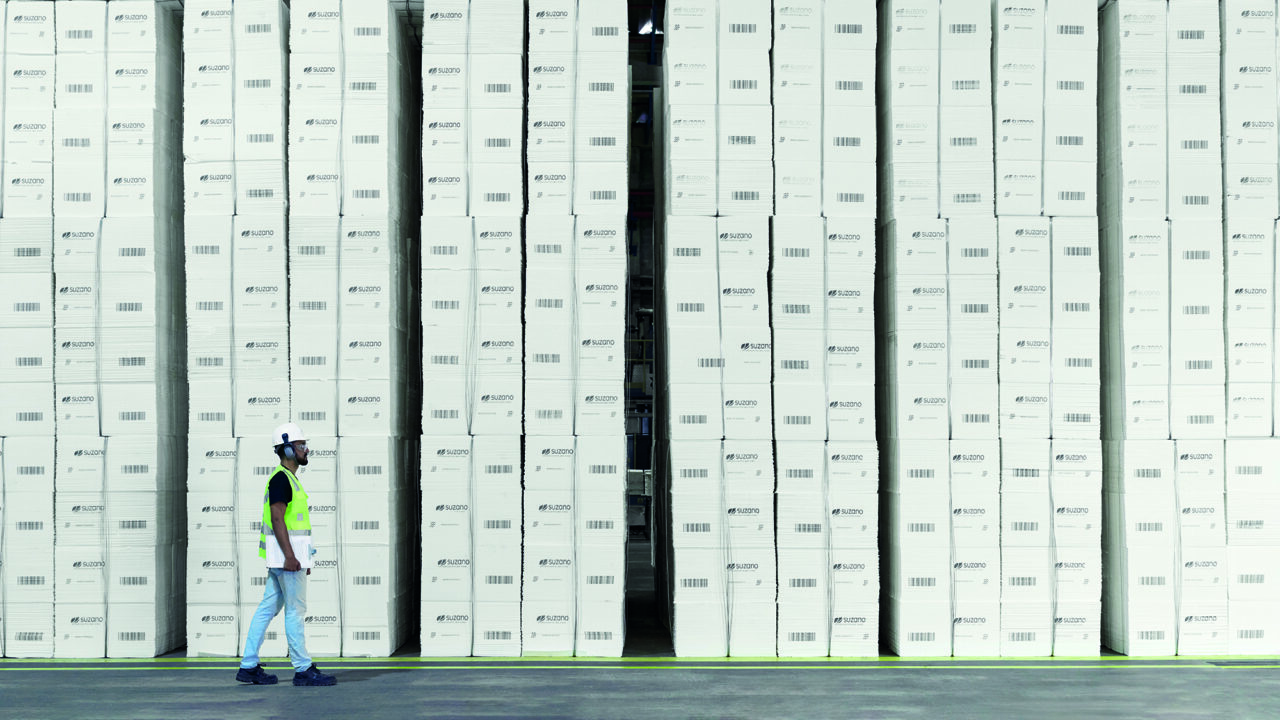
‘Next, these chips are cooked in large boilers. The energy generated from this makes our process self-sufficient in energy. Excess is fed back into the Brazilian power grid, helping support a more renewable electricity matrix in Brazil. After cooking, the pulp goes through a sustainable chemical process to remove the brown components and “bleach” it, followed by drying. Once dry, the pulp is formed into bales. These bales are then transported by train to the ports, and from there, shipped to customers around the world.’
Södra
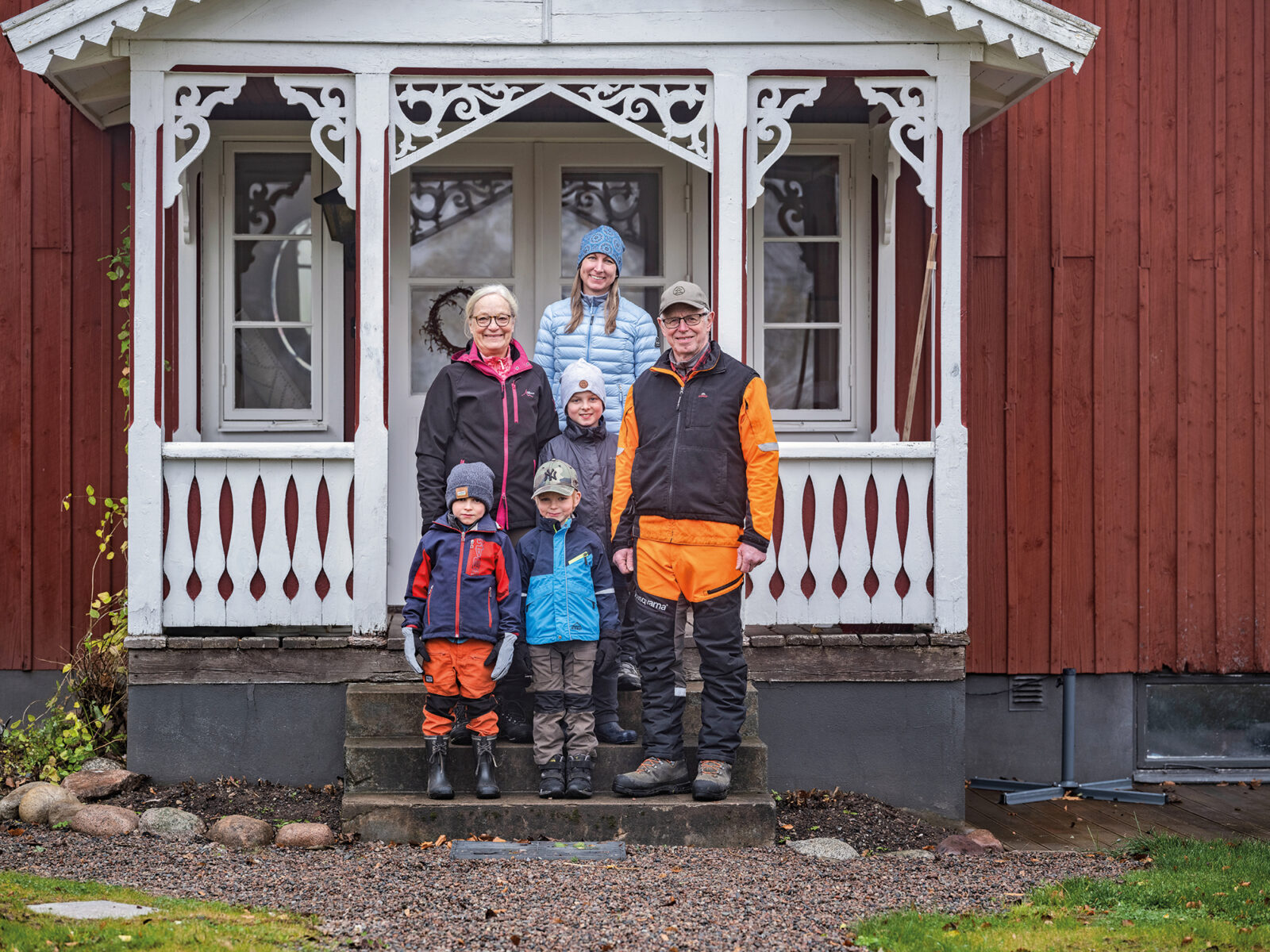
Swedish pulp supplier Södra is a co-operative, jointly owned by more than 50,000 family forest members in southern Sweden. ‘We were founded in 1938,’ explains Södra Cell marketing manager Christina Wennberg, ‘and it has always been our family foresters that owned the company – the mills, our facilities. What makes us unique is that each member has one vote.’ Collectively, the co-op’s members control approximately 2.8 million hectares.
Södra has three mills. Värö produces both pulp and ‘energy products’, including green electricity and biofuel. Mörrum makes both premium paper pulp and hardwood dissolving pulp for textiles. Mönsterås makes softwood and hardwood pulp plus biomethanol.
Because of its ownership structure, Södra is obliged to use all the raw material its members wish to deliver. ‘Nothing goes to waste,’ says Wennberg. ‘We are always trying to find new solutions and innovations to treat raw material responsibly. For example, we can also produce turpentine, lignin (used as a binder in the chemical industry) and biomethanol that are totally fossil free, and create new value from the raw material.’
For many of Södra’s members, forestry ownership spans four or five generations. Forest sizes vary from seven hectares to thousands, but the median size is 79 hectares (though these can be owned by one or more people).
‘Many members have other jobs, so running the forest estate is not their main goal,’ she says. ‘We offer our members education about managing water, reforestation and harvesting. For every tree we harvest, we plant two to three new ones.’
Although the co-operative nature of Södra is steeped in tradition and continuity, innovation is an important part of the operation. Södra has implemented a new in-house planting machine project BraSatt – an innovative method for regeneration and planting to ensure the survival of seedlings. The prototype machine uses industrial robotics to make tree-planting more energy-efficient and less wasteful. Another innovation in forest management devised by Södra is a device called a Cambiguard, which protects young seedlings from animals and insects.
Last November, Södra initiated a public relations campaign called ‘Keep calm and choose family forestry’, which included a pop-up event at London’s Waterloo station. ‘They asked commuters questions about our industry,’ says Wennberg, ‘based on a survey made by Opticom, in which we saw there’s a lack of knowledge when it comes to forestry. There are many myths out there.
‘Some of the myths we tried to bust were like, “oh, the forest has shrunk in the last hundred years”, which was believed by 74% of our sample. But that is a myth. The forest has actually doubled in size over the past hundred years.’

Klabin
Pulp supplier Klabin was founded in 1899 by the Klabin and Lafer families, who had earlier immigrated to Brazil from Lithuania. When Klabin began to export pulp in 2016, Fedrigoni was its first customer. Today pulp production accounts for 40-45% of Klabin’s profits.
The company, which employs 18,000 people across 23 sites – 22 in Brazil and one in Argentina, produces 4.7m tonnes of pulp, paper and packaging annually. Pulp is Brazil’s main raw material. Klabin’s forestry base today totals more than 900,000 hectares, mostly in southern Brazil.
All Klabin’s pulp comes from pine and eucalyptus forests planted specifically for this purpose. Klabin’s executive officer Alexandre Nicolini tells Pulp: ‘We are the only company in Brazil producing three different grades of pulp (eucalyptus, pine and fluff). Brazil maintains high competitiveness by developing forestry that is 100% planted to produce pulp and paper. People tend to believe that companies in Brazil are simply cutting down trees and causing deforestation – which is absolutely not the case!’ he says.
The Ellen MacArthur Foundation cites Klabin as an example of a company that is adopting circular economy principles with positive impacts on biodiversity. It has praised its ‘mosaic forest management system’ in which ‘pine and eucalyptus trees are planted in blocks and mixed with native preserved trees … This practice helps to preserve fauna, flora, and water resources from the Atlantic Forest biome.’
With Brazil’s deadline for zero deforestation set for 2030, is Klabin on track? ‘We are already there,’ Nicolini says. ‘Our forests meet international sustainability standards, and we are committed to combatting illegal deforestation. We do not convert native forests into productive land, following FSC® principles. This commitment applies not only to our own operations but also to our entire supply chain.
‘The forests maintained by Klabin are sequestrating more carbon from the atmosphere than our operations are emitting. On average we plant 111 trees per minute [159,840 per day]. This requires a great deal of work and planning.’
Klabin has set a benchmark for sustainability in Brazil, mostly due to its commitment to climate change and responsible forest management actions; it also dedicates 41% of its forest area to conserving native forests and biodiversity protection. The law requires them to conserve around 30%. This approach is in part driven by a concern for climate change: ‘We are constantly evaluating ways to optimise our productivity and make sure that we can preserve the areas where we have planted pines and eucalyptus. This is why we preserve more than what is prescribed by law. The more we preserve, the less we face the consequences of climate change.’
Another important sustainability goal is to eliminate landfill waste completely by 2030: ‘Pulp and paper are renewable raw materials,’ says Nicolini. ‘They are recyclable, biodegradable by nature and therefore they’re more sustainable. With Klabin, we strive to optimise resources and minimise waste.’ In 2023 Klabin’s solid waste reuse / recycling rate was 99.3%. Other targets include reducing water consumption in the mills, while 100% of Klabin’s industrial process effluents are already treated.
Yet there are other forces at work. Asked about the current pushback in the US against the reality of climate change, Nicolini replies: ‘This affects the whole industry because it’s one less supporter to the overall context. Take single-use plastics for instance. This was on the agenda for many companies across the globe, and pretty much absorbed by major players. We were contributing to those initiatives by developing different packaging solutions to make sure that we remain competitive.
‘Plastic costs less than paper. It takes time to convince people that it’s important to make this change to preserve the environment. But not everybody is fully aligned to that. The major companies need to exercise more power in terms of marketing and communication to make sure that people comprehend the impact that single-use plastic has on the climate.
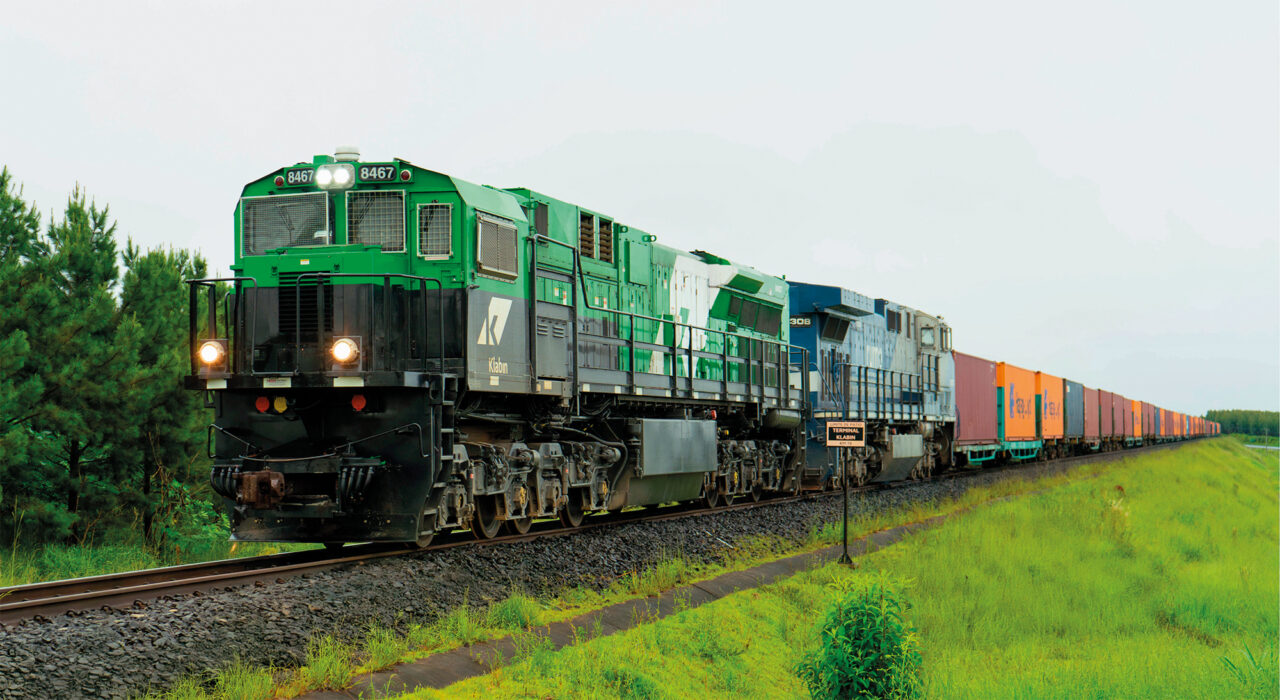
Nicolini is proud that Klabin has significantly reduced the transport of products by road by prioritising loading by rail from the mill to the port for the export markets. This required major investments. ‘We decided to establish a railway connection all the way, almost 500km, to transport around 900,000 tons of pulp per year.
What challenges lie ahead for Klabin? ‘The main challenge is how to engage all the stakeholders for equally sustainable operations,’ says Nicolini. ‘It’s not an easy task, but I strongly believe we are advancing in the right direction.’